
Call us now :07971189498
 Send Inquiry
 Send Inquiry
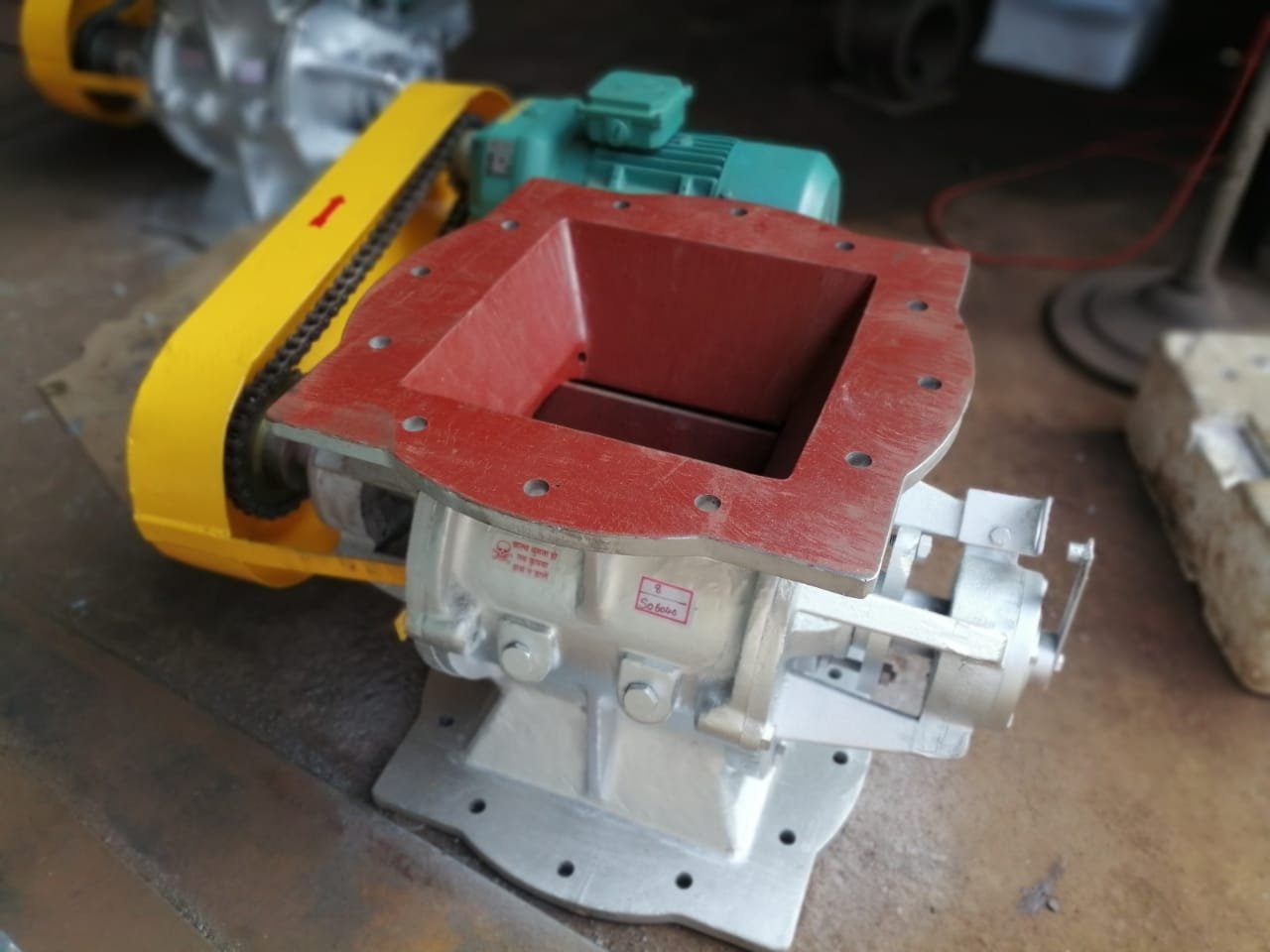
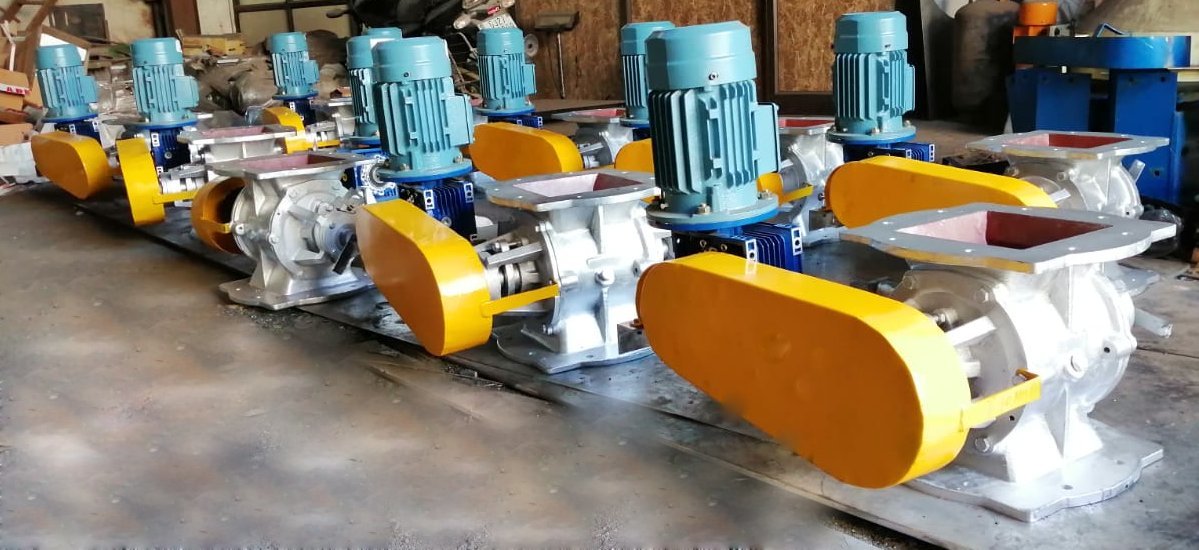
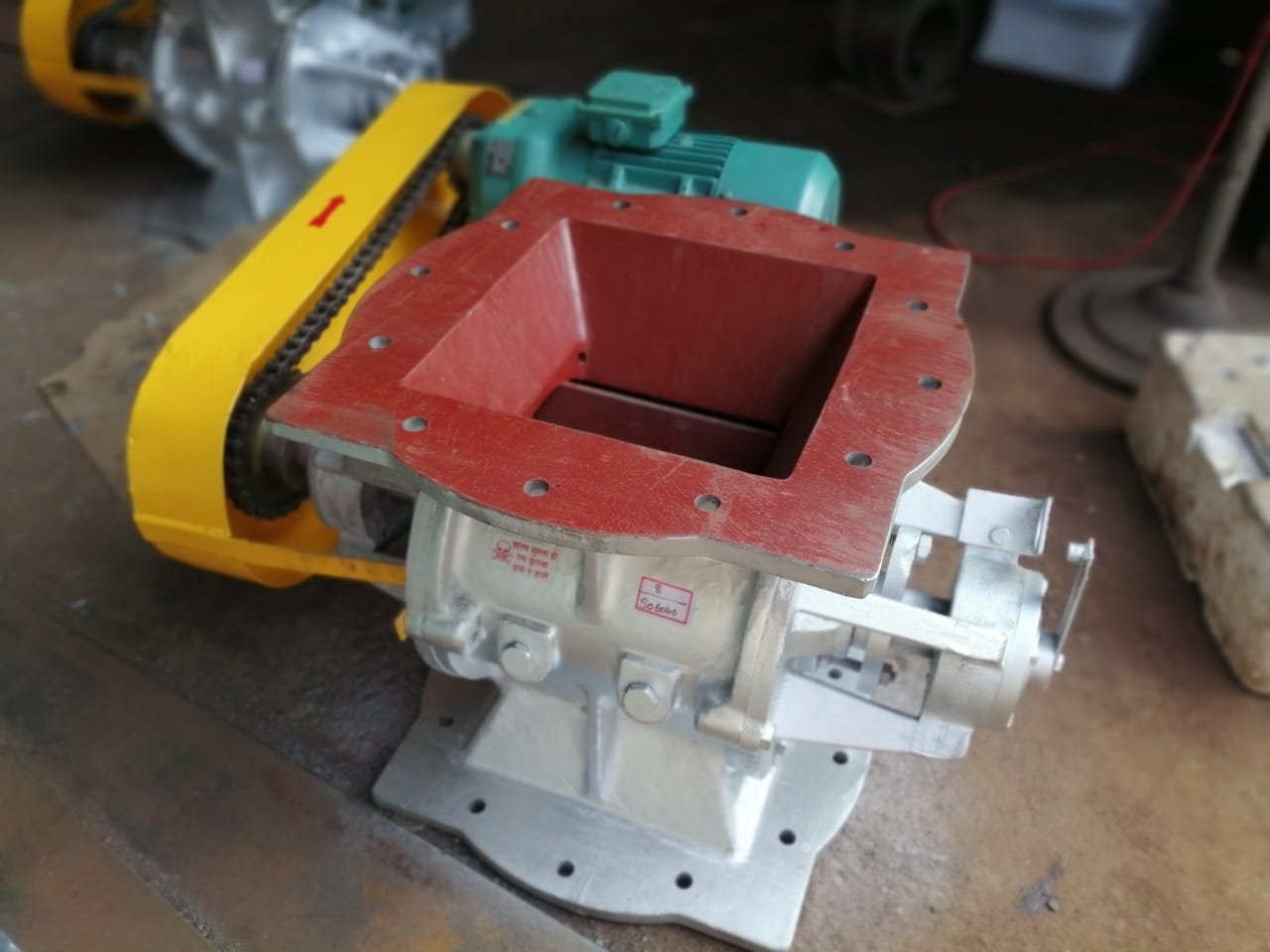
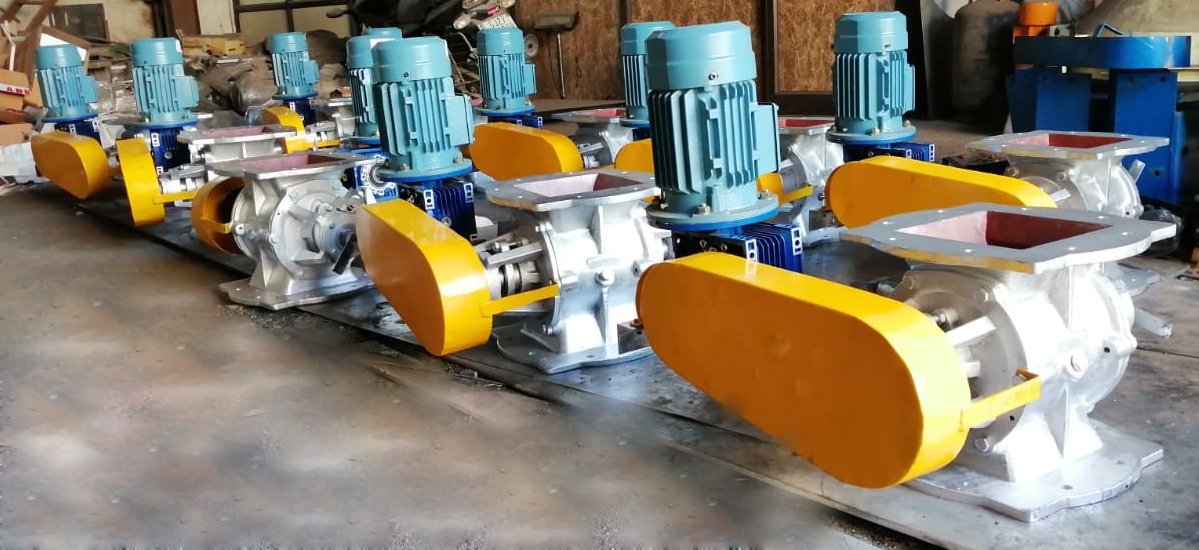
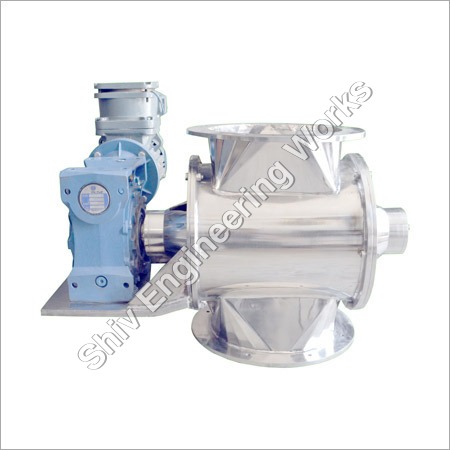
Heavy Duty Air lock valves
Price 10000.00-10000 INR/ Set
MOQ : 1 Unit
Heavy Duty Air lock valves Specification
- Connection
- Flanged Connection
- Sealing
- Nitrile Rubber, Neoprene, EPDM
- Size
- 100 mm, 150 mm, 200 mm, 250 mm, 300 mm, 350 mm, 400 mm
- Voltage
- 230V / 415V for Electric Types
- Finish
- Anti-corrosive finish
- Material
- Cast Iron
- Power
- Electrical Watt (w)
- Media
- Air, Granules, Powders, Bulk Solids
- Temperature of Media
- Up to 200C
- Port Size
- 100 mm to 400 mm
- Flange
- Standard Drilled Flanges as per IS/ANSI/DIN
- Application
- Cement, Minerals, Food, Chemicals, Pharmaceuticals, Industrial Dust Collection Systems
- Number of Blades
- 6-8 vanes
- Mounting
- Horizontal / Vertical
- Maintenance
- Easy Replaceable Seals and Bearings
- Optional Features
- Blow Through / Drop Through Models; Explosion Proof Construction
- Rotor Shaft Material
- EN8/EN9
- Rotor Type
- Open or Closed Rotor
- Capacity
- Up to 50 TPH
- Surface Treatment
- Shot Blasted & Painted / Powder Coated
- Bearings
- Heavy Duty Ball Bearings
- Drive Type
- Chain drive or Direct drive
- Body Thickness
- 8 mm to 12 mm
- Air Leakage
- Low Leakage Design
Heavy Duty Air lock valves Trade Information
- Minimum Order Quantity
- 1 Unit
- Supply Ability
- 30 Units Per Month
- Delivery Time
- 3 Week
- Main Export Market(s)
- Western Europe, Australia, North America, Central America, Eastern Europe, Africa, Middle East, South America, Asia
- Main Domestic Market
- All India
About Heavy Duty Air lock valves
Clients can avail from us a wide range of Heavy Duty Airlock Valves for which we are well-known manufacturer and supplier. Used for dust discharge device, the offered valves are manufactured in tandem with the guidelines laid in the industry. To ensure safe dispatch at the clients' premises, the offered valves are packed properly. Post-production, the offered Heavy Duty Airlock Valves are checked rigorously to ensure defect-free range.
Key Features:
- Sturdy construction
- High performance
- Minimal maintenance
Robust Design for Demanding Applications
Designed for longevity and reliability, these air lock valves feature a sturdy body and rotor shaft crafted from premium EN8/EN9 material. Engineered to withstand challenging environments, they resist wear and ensure consistent performance, even with abrasive bulk solids or high temperatures up to 200C. Suitable for various industrial settings, their low-leakage construction supports efficient process control.
Versatile Mounting and Operation
With options for both horizontal and vertical mounting, these air lock valves integrate seamlessly into diverse process layouts. Direct and chain drive types cater to specific operational preferences, while a range of port sizes and standardized flanges (IS/ANSI/DIN) guarantee compatibility with existing systems. Their modularity allows for quick adaptation and simplified installation.
Reliable Performance and Easy Maintenance
Equipped with heavy-duty ball bearings and replaceable seals, these valves minimize downtime and ease maintenance routines. The anti-corrosive coating, powder coating, or painting protects against harsh environments, ensuring longevity. Optional explosion-proof construction provides additional safety in volatile conditions, making them suitable for stringent industrial applications.
FAQ's of Heavy Duty Air lock valves:
Q: How do Heavy Duty Air Lock Valves help improve material handling efficiency in industrial processes?
A: Heavy Duty Air Lock Valves maintain a controlled pressure differential within processing systems, enabling continuous feeding or discharge of materials-like powders, granules, or bulk solids-while minimizing air leakage. This optimizes process efficiency, reduces material wastage, and supports consistent product quality.Q: What materials and surface treatments are used to ensure durability and resistance to corrosion?
A: The valves are manufactured from robust cast iron with either shot blasted and painted or powder-coated finishes for excellent resistance to abrasion and corrosion. Key components like rotors use EN8/EN9 material, while sealing options include nitrile rubber, neoprene, or EPDM, further extending operational life, especially in harsh environments.Q: When is it optimal to use the blow-through versus the drop-through model?
A: Blow-through models are ideal when conveying light, dry powders in pneumatic systems, as they facilitate easy air or gas flow through the rotor. Drop-through valves suit applications where gravity feeding of bulk solids or granules is required, supporting direct discharge into downstream equipment.Q: Where can Heavy Duty Air Lock Valves be installed within process plants?
A: These valves are versatile for horizontal or vertical mounting and commonly installed at discharge points of cyclones, hoppers, bag filters, or mixers in industries such as cement, food processing, minerals, chemicals, and pharmaceuticals. Standard flanged connections ensure easy integration into various system configurations.Q: What makes the maintenance of these air lock valves straightforward?
A: The design includes easy-replaceable seals and bearings, coupled with heavy-duty ball bearings that support long-term use. Maintenance involves minimal downtime thanks to quick-access components and anti-corrosive finishes that reduce the frequency of servicing.Q: How does the low-leakage design benefit dust collection and air handling systems?
A: The low-leakage rotor and precision seal arrangement reduce unwanted air loss, essential for maintaining vacuum or pressure balance in dust collection and air handling applications. This helps improve filtration efficiency, energy savings, and environmental compliance.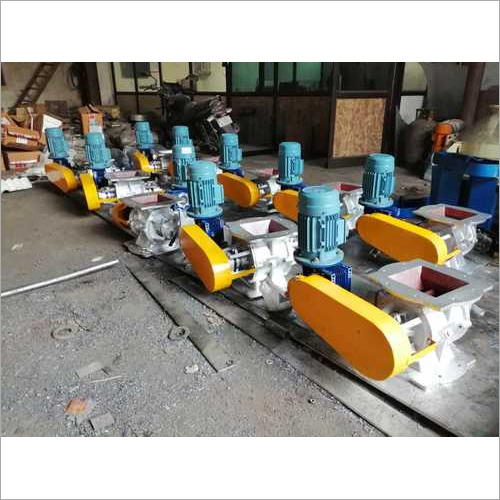
Tell us about your requirement

Price:
Quantity
Select Unit
- 50
- 100
- 200
- 250
- 500
- 1000+
Additional detail
Mobile number
Email

More Products in Rotary Airlock Valves Category
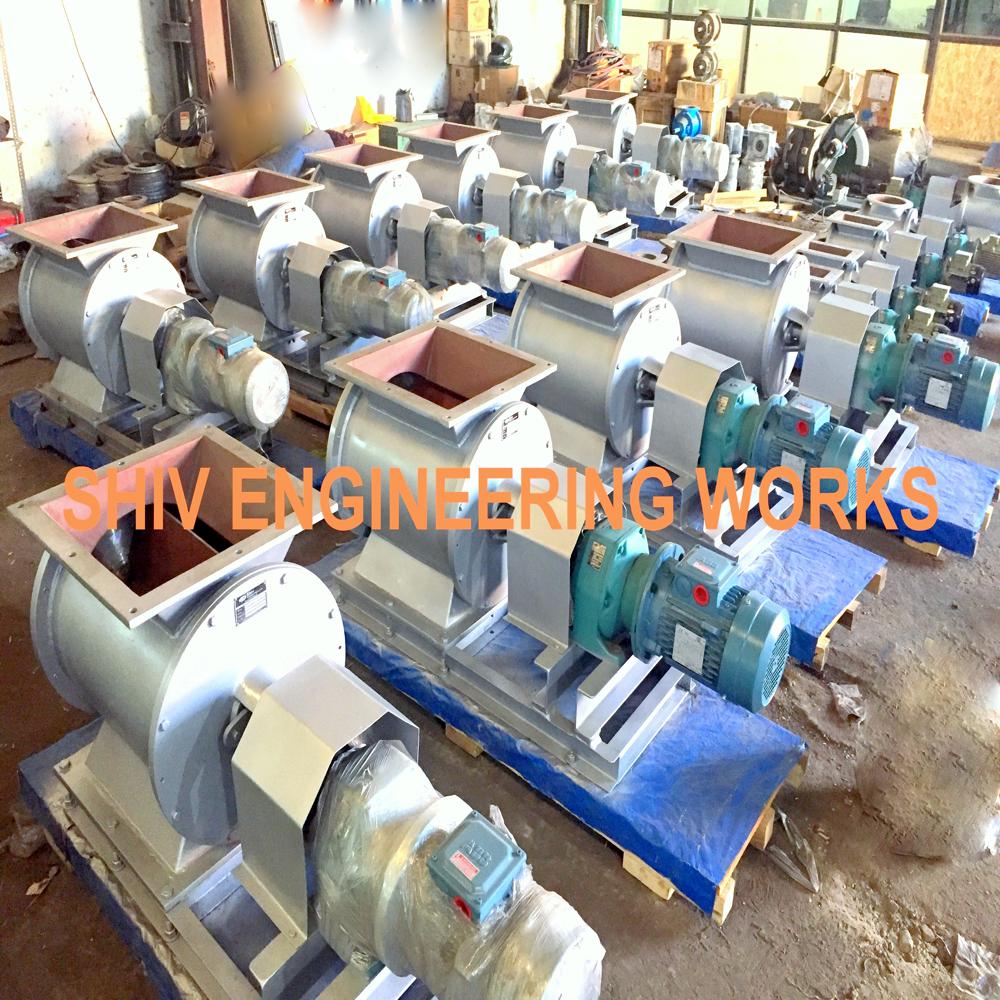
ROTARY AIRLOCK VALVE
Price 29500 INR / Number
Minimum Order Quantity : 1 Number
Size : 150 mm to 400 mm (Inlet / Outlet)
Sealing : Gland Packing / ORing (as per application requirements)
Connection : Other, Flanged End
Power : Other, Electric (Motor Driven)
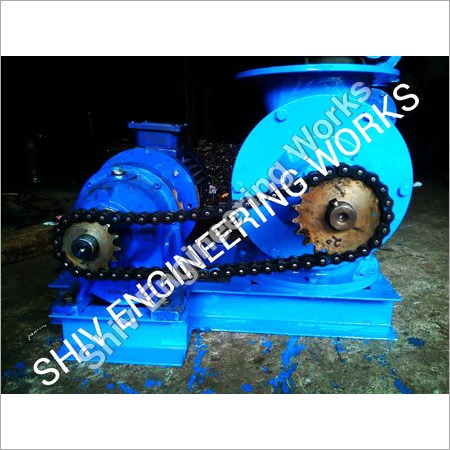
Heavy Duty Airlock Valves
Price 1000 USD ($) / Set
Minimum Order Quantity : 1 Set
Size : Multiple sizes as per requirement
Sealing : HighTemperature Seals
Connection : Other, Flanged
Power : Electrical Watt (w)
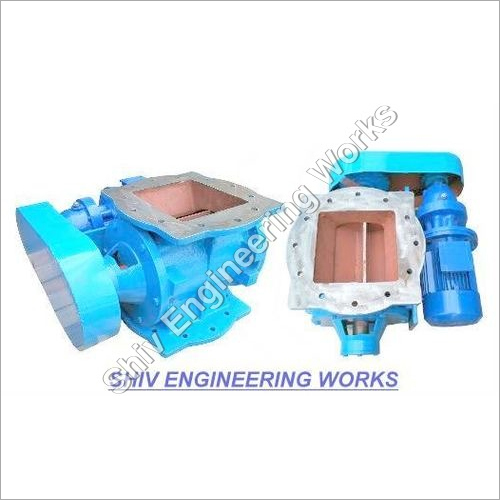
Self Cleaning Rotary Airlock Valves
Price 1000 USD ($) / Set
Minimum Order Quantity : 1 Set
Size : Customized as per requirement
Sealing : Dusttight, Airtight
Connection : Other, Flanged
Power : Electrical Watt (w)
Stainless Steel Rotary Airlock Valves
Price 1000 INR / Set
Minimum Order Quantity : 1 Set
Size : Customizable as per requirements
Sealing : Air Tight Rotary Seal
Connection : Other, Flanged
Power : Other, 0.5 HP to 3 HP (depending on model)

 Send Inquiry

Plot No. 40, Kailash Nagar Estate, Phase - 1, Vatva Gidc.Ahmedabad - 382445, Gujarat, India

Mr Amit Sathvara
(Proprietor)
Mobile :07971189498
 Send Inquiry
 Send SMS
Developed and Managed by Infocom Network Private Limited.
